Medical Dispensary vs. Recreational Dispensary - Key Differences
Both types of dispensaries sell legal cannabis, but they operate under different rules, serve different customers, and often deliver noticeably different experiences. Knowing which one fits your situation can save you money, expand your product access, and make your first visit far less confusing.

Who Can Walk Through the Door
Recreational dispensaries, also called adult-use dispensaries, are open to any adult aged 21 or older with a valid government-issued photo ID. A driver's license, passport, or state ID all work. No appointment, no paperwork, no medical history required.
Medical dispensaries require a valid medical marijuana card issued by your state. Most states set the minimum age at 18 for medical patients, which means qualifying patients between 18 and 20 can access cannabis legally through a medical facility when recreational purchase would not be an option. In some states, minors with documented conditions can access medical cannabis through a designated caregiver. Always check your specific state's rules before assuming eligibility.

Pricing and Tax Differences
One of the most practical differences between the two is cost. Recreational cannabis carries excise taxes, state sales taxes, and sometimes local taxes stacked on top of each other. Medical patients in many states are exempt from some or all of those taxes, producing savings of roughly 5%–37% compared to recreational pricing.
The products themselves are priced similarly across both dispensary types. Flower typically runs $8–$20 per gram, concentrates like wax, shatter, and live resin range from $25–$60 per gram, and edibles usually cost $10–$30 per package. The tax structure is where the real financial divergence happens. For a regular cannabis user, that difference adds up quickly over a year of purchases.
Purchase Limits
Recreational customers are generally capped at 1 ounce (28 grams) of flower per transaction. That limit is consistent across most legal U.S. states and resets with each dispensary visit.
Medical patients typically have access to larger quantities. Many states allow medical cardholders to purchase 2–4 ounces of flower within a 30-day period, though the exact figure varies considerably by state. Some medical programs also provide extended limits for patients managing serious or chronic conditions. If quantity access matters to you, a medical card is often the more practical path.
Product Selection
What Recreational Dispensaries Carry
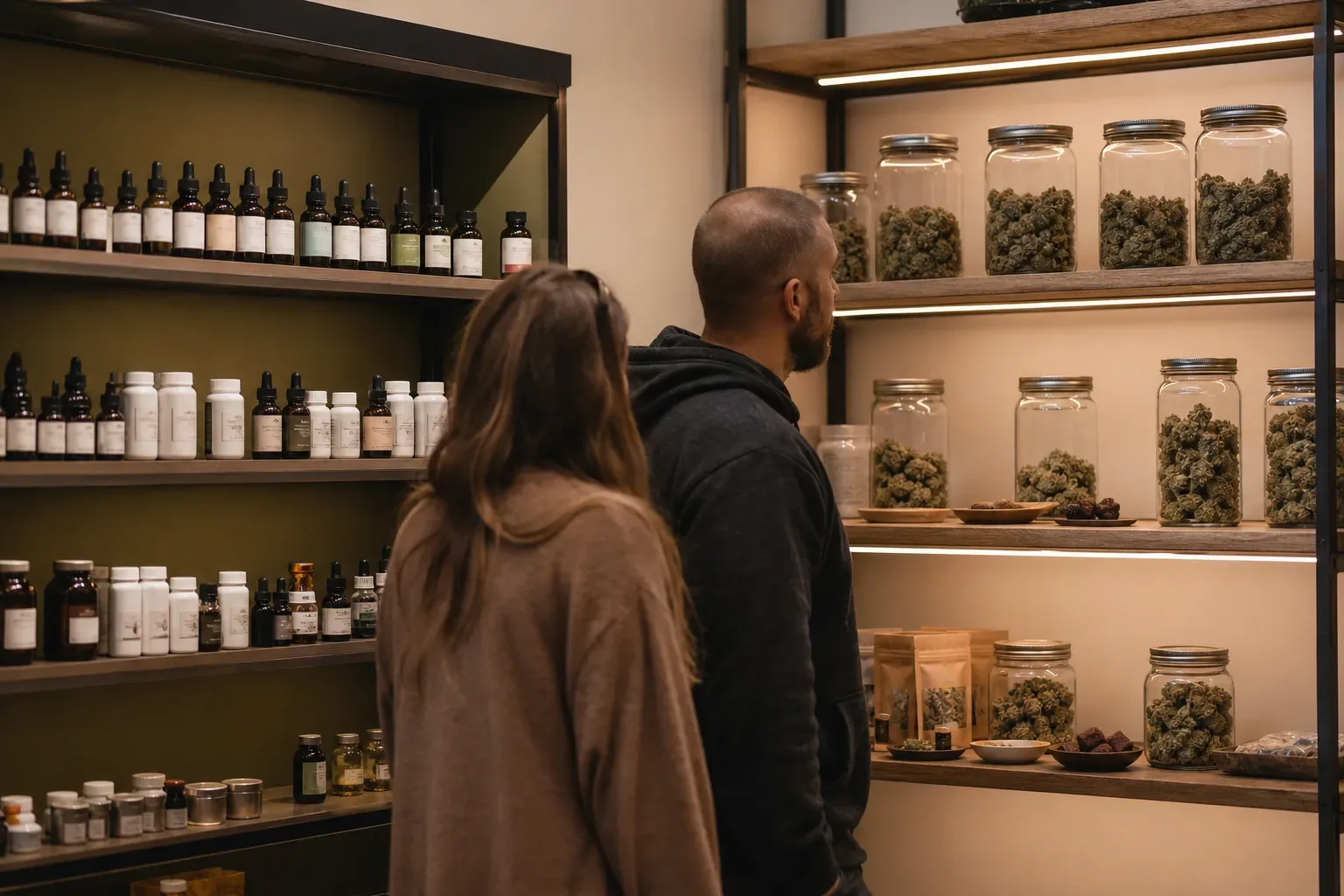
Adult-use dispensaries stock a broad range of products designed to appeal to a wide customer base. Flower, pre-rolls, vape cartridges, edibles, tinctures, and capsules are standard inventory. Recreational shelves tend to emphasize approachability, with clear potency labeling and popular formats that casual consumers recognize.
What Medical Dispensaries Carry
Medical dispensaries often carry a wider range of cannabinoid profiles, including high-CBD formulations, precise-dose capsules, and products with specific ratios of THC to CBD. Some states also permit medical dispensaries to sell higher-potency concentrates or formulations that recreational stores cannot stock. Patients looking for therapeutic consistency rather than variety will generally find a more targeted selection at a medical facility.
Capsules run $20–$50 per package, and tinctures are typically priced at $20–$60 per 30 mL bottle. Medical-grade or CBD-dominant versions tend to land at the higher end of those ranges.
The In-Store Experience
Budtenders and Staff Knowledge
Budtenders work at both types of dispensaries. At a recreational shop, they tend to focus on experience, preference, and potency questions from first-time or casual shoppers. At a medical dispensary, staff are more accustomed to detailed conversations about symptoms, dosing goals, and product consistency.
In either setting, budtenders are trained sales associates, not licensed medical professionals. They can help match you to a product based on your goals and experience level, but clinical decisions should go through a physician. If you have a medical marijuana card, you were likely already evaluated by a doctor who can address those questions more precisely.
Atmosphere and Process
Recreational dispensaries are often designed for high foot traffic. The process is relatively fast: show ID, browse, purchase, leave. Many operate like retail stores with open display cases, digital menus, and ATMs on-site.
Medical dispensaries tend to have a quieter, more consultation-oriented atmosphere. Some require appointments, particularly smaller facilities in states with strict patient limits. The check-in process involves verifying your medical card in addition to your ID, which adds a minute or two to the visit but often means shorter lines and more individualized attention.
Payment Options
All dispensaries, both medical and recreational, accept cash. Many also have on-site ATMs or offer cashless debit payment terminals. Credit card acceptance remains rare because cannabis businesses face significant federal banking restrictions regardless of state-level legality. Bringing cash or a debit card is the safest approach for any dispensary visit.
Getting a Medical Card - Is It Worth It
For regular cannabis users or anyone managing a specific health condition, a medical card frequently pays for itself within a few months. State-issued card application fees run $50–$200, and the physician evaluation is a separate cost. Set against 5%–37% in recurring tax savings plus higher purchase limits and broader product access, the math often favors getting the card.
For someone who uses cannabis occasionally or just wants to try it without the paperwork, a recreational dispensary is the simpler starting point. Both options are valid. The right choice depends on how frequently you consume, what you're using cannabis for, and whether the product selection at a medical facility addresses your specific needs more precisely than a recreational store.
Dual-License Dispensaries
Some facilities hold both a medical and a recreational license, serving both types of customers under one roof. Patients check in through a separate queue, receive their medical pricing and purchase limits, and often access a distinct product menu. These hybrid operations are increasingly common in states with mature cannabis markets. If you hold a medical card and visit a dual-license location, ask staff to confirm you are being processed as a medical patient so you receive the correct pricing and purchase allowances.
Frequently Asked Questions
What Is the Difference Between Recreational and Medical Cannabis?
Recreational cannabis is sold to any adult 21 or older without a medical reason, while medical cannabis is dispensed to patients who hold a state-issued medical marijuana card, typically after a physician evaluation. Medical cannabis programs often allow larger purchase quantities, access to higher-CBD or specialized formulations, and tax exemptions that recreational buyers do not receive. THC is the primary psychoactive compound in cannabis, and CBD is non-intoxicating and more associated with therapeutic use. Both types of cannabis products are available in dispensaries, but the rules around who can buy them, how much, and at what price differ significantly.
What Are the Medical Dispensary vs Recreational Differences?
Medical dispensaries require a valid medical marijuana card and often offer lower prices due to tax exemptions, higher purchase limits (typically 2–4 ounces per 30 days versus 1 ounce per transaction at recreational stores), and a more targeted product selection including specialized cannabinoid ratios. Recreational dispensaries are open to any adult 21 or older with a government-issued ID and no paperwork. The in-store experience at a medical facility tends to be quieter and more consultation-focused, while recreational shops are generally faster and higher in foot traffic.
Do Medical Patients Pay Less at a Dispensary?
Yes, in most legal states medical patients pay less because they are exempt from some or all cannabis excise and sales taxes that recreational buyers pay. The tax savings range from roughly 5% to 37% depending on the state. The base product prices, such as $8–$20 per gram for flower, are similar at both types of dispensaries, so the cost difference comes almost entirely from the tax treatment. For frequent consumers, those savings can easily exceed the cost of a medical card application over a year.
Can You Use a Recreational Dispensary Without a Medical Card?
Yes. Recreational dispensaries, also called adult-use dispensaries, are open to any adult aged 21 or older who presents a valid government-issued photo ID such as a driver's license, passport, or state ID. No medical card, physician note, or pre-registration is required. You simply show your ID at the door, speak with a budtender, and purchase within the standard 1-ounce-per-transaction limit that most recreational states enforce.
What Products Are Only Available at Medical Dispensaries?
Some states restrict higher-potency concentrates, specific THC-to-CBD ratio products, and pharmaceutical-style formulations to medical dispensaries only. Medical facilities also more consistently stock precise-dose capsules and CBD-dominant tinctures designed for symptom management rather than general enjoyment. That said, most standard products including flower, edibles, and vape cartridges are available at both types of dispensaries. The exact product restrictions depend on your state's regulations, so checking with the dispensary before your visit is the safest approach.