Recreational vs. Medical Dispensary - Which One Do You Need?
Walking into the wrong type of dispensary wastes time and, depending on the state, can cost you meaningfully more money per visit. The distinction between recreational and medical dispensaries affects who can enter, what ID you carry, how much product you can buy, and what you pay at the register.
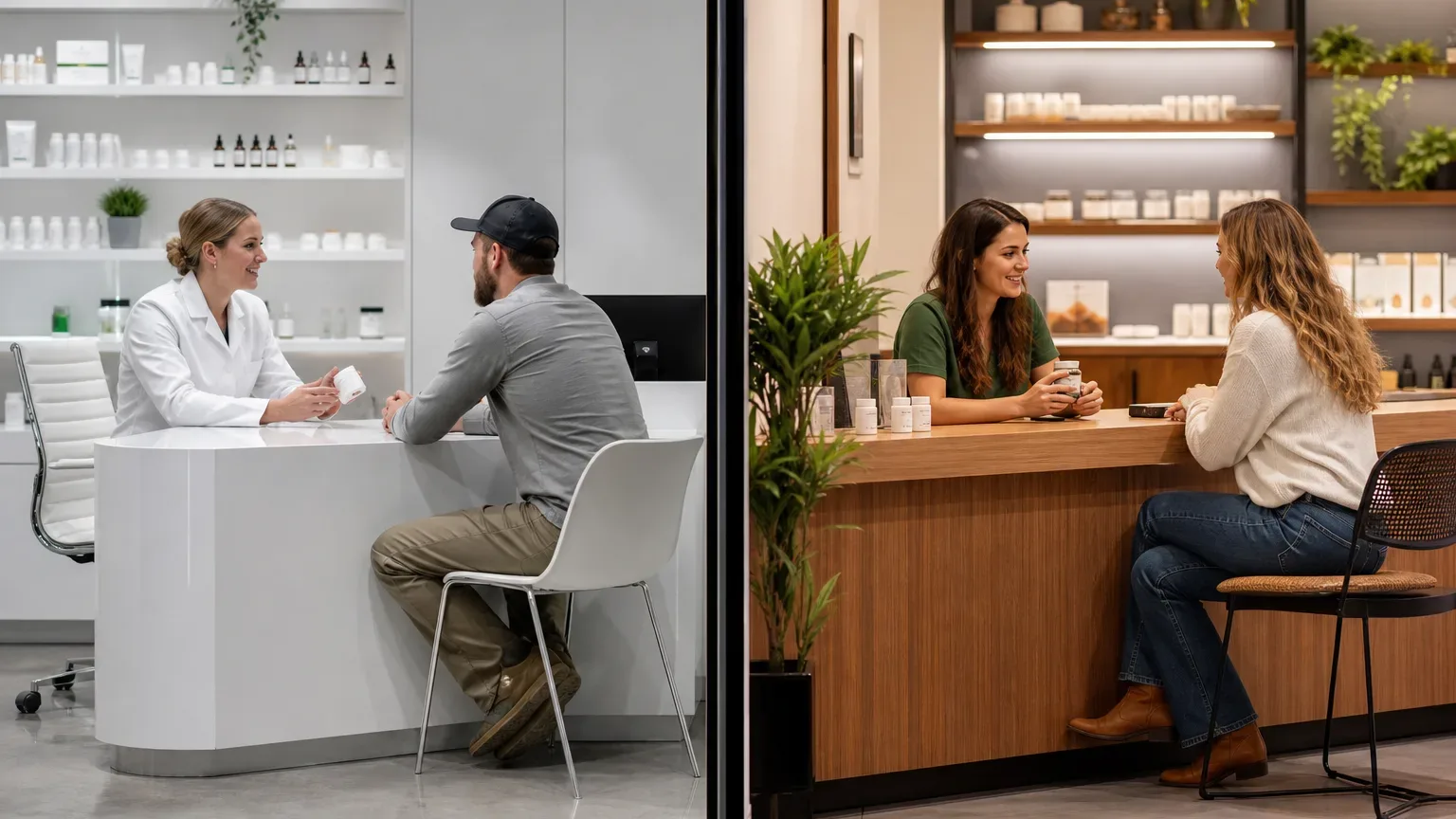

How the Two Types of Dispensaries Differ
A recreational dispensary, also called an adult-use dispensary, is a state-licensed retail store that sells cannabis to any adult aged 21 or older. No medical documentation is required. You show a valid government-issued photo ID, a driver's license, passport, or state ID, and you can browse and buy.
A medical dispensary is a state-licensed facility that serves patients who hold a valid medical marijuana card. The minimum age drops to 18 with a qualifying condition and a valid card. Some dispensaries operate under a dual license, meaning they serve both recreational customers and medical patients under one roof, though often through separate lines or counters.
Both types require a valid government-issued photo ID for entry. The core difference is that medical access requires an extra credential: your state-issued medical marijuana card.
Recreational Dispensary vs. Medical Dispensary - Key Differences at a Glance
Purchase Limits
Recreational customers are typically capped at 1 ounce, or 28 grams, of flower per transaction in most U.S. states. Medical patients often have access to significantly larger amounts: 2–4 ounces of flower per 30-day period, depending on state regulations. If you use cannabis consistently for a health condition, that difference adds up fast.
Product Access
Medical dispensaries in some states carry formulations, potency levels, or cannabinoid ratios not available on recreational shelves. High-CBD products, specific tincture strengths, and capsules calibrated for medical use sometimes appear only in the medical program. Recreational menus have expanded considerably across legal states, but medical programs still lead in clinical-grade product variety in certain markets.
Age Requirements
Recreational dispensaries require customers to be at least 21 years old, with no exceptions. Medical dispensaries serve patients as young as 18 who hold a valid medical marijuana card. In some states, minors with serious conditions can qualify through a caregiver authorization program, though the rules vary significantly by state.
What Documents Do I Need for a Medical Dispensary?
You need two things: a valid government-issued photo ID and a current medical marijuana card issued by your state. The ID confirms your identity and age. The medical card confirms you are an enrolled patient in your state's medical cannabis program.
Some states issue a physical card, while others provide a digital certificate or registry ID number you can present on your phone. A standard medical marijuana card application costs $50–$200 in state fees, separate from the physician evaluation you complete beforehand. Cards typically require annual renewal, and the renewal process usually repeats the physician consultation.
What If My Card Is from Another State?
Most states do not recognize out-of-state medical marijuana cards. If you travel, check whether your destination state has a reciprocity program before assuming you can access a medical dispensary. Without reciprocity, out-of-state visitors must use recreational dispensaries if adult-use cannabis is legal there.

Do You Need a Prescription for a Medical Dispensary?
No, cannabis is not prescribed in the traditional sense because it remains a Schedule I controlled substance under federal law. Instead, a licensed physician, in some states also a nurse practitioner or physician assistant, evaluates you and issues a written certification or recommendation that you meet qualifying criteria.
You take that certification to your state health department to apply for the actual medical marijuana card. The card, not a prescription slip, is what grants dispensary access. This is a meaningful distinction: the certification is a gate to the card program, not a document you hand to a pharmacist.
Medical Dispensary Pricing vs. Recreational
Medical patients consistently pay less, and the gap is driven almost entirely by taxes. Recreational cannabis carries excise taxes, cannabis-specific sales taxes, and in some states local municipality taxes that stack on top of each other. Medical cannabis is exempt from some or all of these taxes in many states, producing savings of 5%–37% over recreational pricing depending on the state.
The underlying product cost is the same. Flower runs $8–$20 per gram, concentrates run $25–$60 per gram, edibles run $10–$30 per package, tinctures run $20–$60 per bottle, and capsules run $20–$50 per package regardless of which counter you stand at. On a $60-per-gram live resin purchase, a 15% tax exemption saves $9 immediately. Spread that across a monthly supply and the medical card application fee often pays for itself within a few visits.
Patients who use cannabis daily or in high quantities have the most to gain from the tax savings. Casual users who buy a gram or two a few times a year may find the application cost outweighs the savings, making recreational access the practical choice.
Which One Is Right for You?
The answer comes down to three practical questions: your age, your reason for using cannabis, and how often you buy.
If you are 21 or older, use cannabis socially or occasionally, and do not have a qualifying medical condition, a recreational dispensary is the straightforward path. No extra paperwork, no annual renewal, and dispensary menus across legal states now carry a wide enough selection for most consumers.
If you use cannabis to manage a specific condition, including chronic pain, anxiety, epilepsy, or PTSD, a medical card may be worth pursuing for three reasons. First, the tax savings compound over time. Second, purchase limits are higher, reducing how often you need to visit. Third, some states allow medical patients to grow more plants at home than recreational users.
Budtenders at both types of dispensaries can help you compare products and dosing based on your goals and experience level. They are trained retail staff, not licensed medical professionals. For any condition-specific guidance, your certifying physician is the right source.
Payment, ATMs, and What to Expect at the Counter
All dispensaries, recreational and medical alike, accept cash. Many also provide on-site ATMs or cashless debit options for customers who do not carry cash. Credit card acceptance remains rare because federal banking restrictions make it difficult for cannabis businesses to process card payments through major networks.
Bring your ID every visit, even if the staff recognizes you. Both recreational and medical dispensaries are legally required to verify identification at the door. A medical dispensary will also scan or verify your card status against the state patient registry before completing any transaction.

Frequently Asked Questions
Recreational Dispensary vs Medical Dispensary - What Is the Main Difference?
A recreational dispensary serves any adult aged 21 or older with a valid government-issued photo ID and no medical documentation required. A medical dispensary serves patients aged 18 or older who hold a state-issued medical marijuana card. Medical patients typically pay less due to tax exemptions of 5%–37% and can buy more product per 30-day period, often 2–4 ounces of flower compared to the 1-ounce recreational limit per transaction.
What Documents Do I Need for a Medical Dispensary?
You need a valid government-issued photo ID, such as a driver's license, passport, or state ID, plus a current medical marijuana card issued by your state. Some states provide a digital card or registry number in place of a physical card. The state application fee for the card ranges from $50–$200, separate from the physician evaluation fee. Cards typically require annual renewal.
Do You Need a Prescription for a Medical Dispensary?
No. Because cannabis is still a Schedule I controlled substance federally, doctors cannot write a traditional prescription for it. Instead, a licensed physician evaluates you and issues a written certification that you meet qualifying criteria. You use that certification to apply for a state-issued medical marijuana card, which is what actually grants you access to a medical dispensary.
Medical Dispensary Pricing vs Recreational - How Much Do You Actually Save?
The underlying product prices are the same at both types of dispensaries. Flower costs $8–$20 per gram, concentrates $25–$60 per gram, and edibles $10–$30 per package regardless of counter type. The savings come from tax exemptions. Medical patients in many states avoid excise and sales taxes that apply to recreational purchases, producing savings of 5%–37% depending on the state. Frequent buyers usually recover the $50–$200 card application fee within a handful of visits.
Can You Use a Medical Marijuana Card from Another State at a Medical Dispensary?
Most states do not recognize out-of-state medical marijuana cards. A small number of states have reciprocity programs that honor valid cards from other states, but these are the exception rather than the rule. If you are traveling and your destination state does not have reciprocity, you will need to use a recreational dispensary, provided adult-use cannabis is legal there and you are 21 or older.